
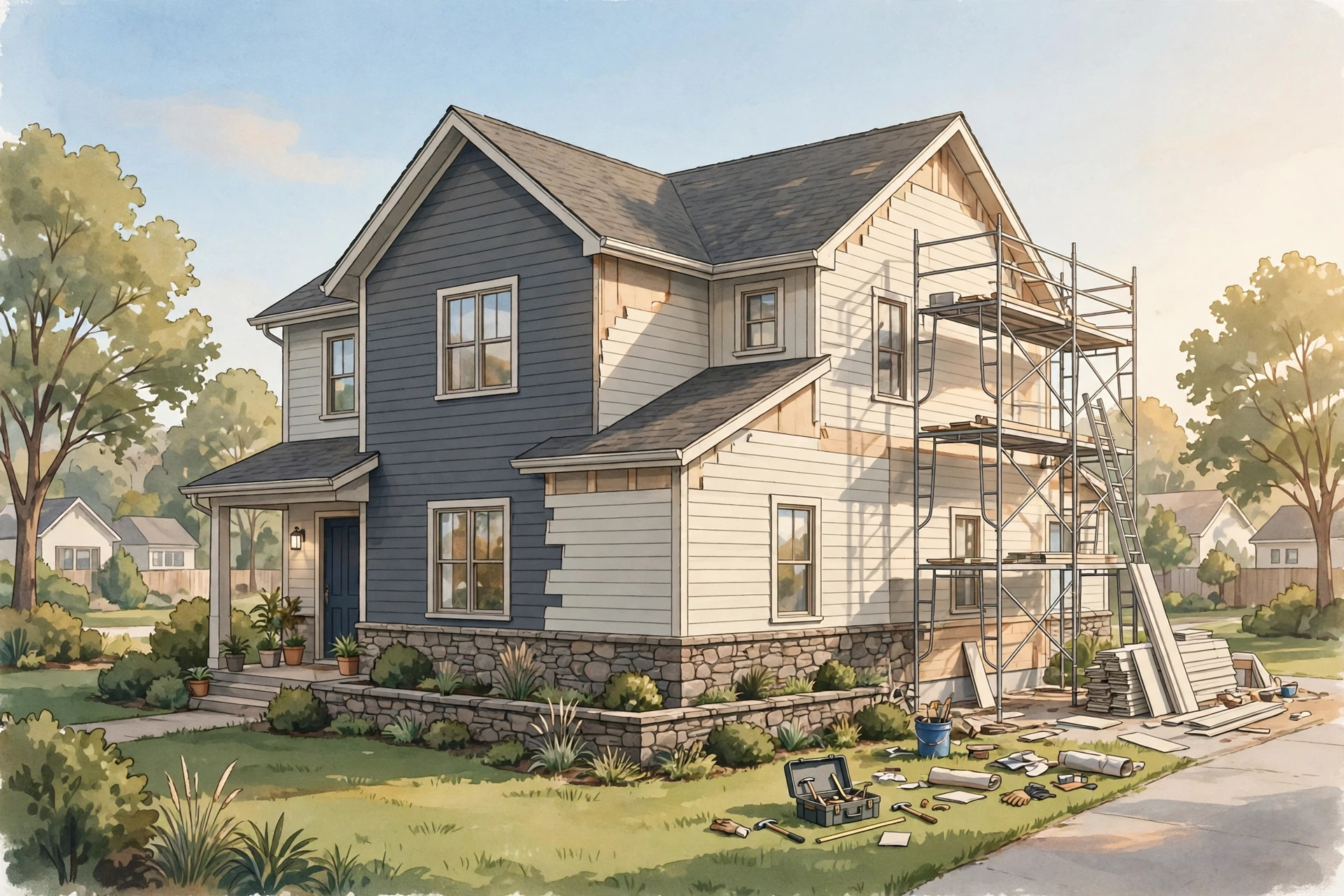
An exterior renovation Long Island homeowners plan well does two jobs at once: it makes the house look like one intentional design, and it rebuilds the envelope — roof, siding, trim, flashing, windows — that keeps coastal weather out of the walls. Long Island homes take wind-driven rain, salt air near the shores, freeze-thaw cycles, and summer sun, so exterior work planned as a system outlasts exterior work bought as decoration.
This guide covers how to scope an exterior renovation, the order the trades should run in, and the details that decide whether the result lasts. It is general planning guidance for Nassau and Suffolk homes.
Scope the Envelope, Not Just the Look
Start with a condition survey, ideally with your contractor walking the whole exterior with you:
- Roof — age, leaks, flashing at chimneys and walls, ventilation
- Siding — rot, warping, failed paint, gaps at joints and penetrations
- Trim, soffits, and fascia — the soft spots where water usually enters first
- Masonry and stone — cracked mortar, spalling brick, failing stucco
- Windows and doors — seals, rot, operation, and how they meet the siding
- Driveway, stoop, and drainage — where water lands and where it is sent
Photograph and list everything before discussing colours. A renovation that fixes the water paths first and the appearance second rarely needs to be redone; the reverse order often does. Finished exterior work in local project galleries, like this Elmont complete renovation, shows how siding, stone, and trim choices combine on a real house — a useful reference when you shortlist materials. Before choosing colours, an exterior renovation Long Island project should confirm which materials suit the home’s exposure and style.
Exterior Renovation Long Island: Sequencing the Work
Exterior trades overlap, so order matters:
- Structural and masonry repairs — fix what siding or stone will cover.
- Roofing — including flashing details where the roof meets walls, so new siding tucks correctly beneath them.
- Windows and doors — installed and flashed before the surrounding siding closes in.
- Siding, stucco, or stone — with housewrap, flashing tape, and sealed penetrations done as a system, not an afterthought.
- Trim, soffits, gutters — the water-shedding details and the finished edges.
- Painting, driveway, and site finishes — last, once heavy work is done.
Reversing steps 2–4 is a classic error: new siding installed before a roof replacement gets cut, flashed twice, and patched — visibly. A well-sequenced exterior renovation Long Island plan treats the house as one envelope, not as separate siding, roofing, and window jobs.
Material Choices for This Climate
- Siding. Vinyl is low-maintenance and common; fibre-cement offers a crisper look with painting upkeep; cedar suits many Long Island styles but needs committed maintenance. Choose for the maintenance you will actually do.
- Stone and brick work. Veneer at the base, stoop, or chimney adds weight and character; the flashing and mortar details decide whether it sheds water or traps it.
- Roofing. Architectural shingles are the local standard; ventilation and ice-and-water protection at eaves matter as much as shingle brand.
- Windows. Replacement windows should be measured to the opening and flashed properly — a premium window installed carelessly performs like a cheap one.
Permits and Neighbourhood Rules
Siding and roofing replacements are treated differently from structural changes, additions, or work that changes openings; some villages and historic or HOA-governed areas also review visible exterior changes. Requirements vary by municipality and scope, so confirm what applies to your project — approvals, permits, and any design review — before materials are ordered. Confirming these rules early helps an exterior renovation Long Island project avoid rework once materials are ordered.
Budgeting and Phasing the Work
A full exterior renovation is a significant project, and many homeowners phase it — roof and flashing one year, siding and trim the next, stone and site work after that. Phasing is sensible when the sequence above is respected: each phase should leave the envelope weather-tight and be planned so the next phase does not undo it.
Ask your contractor to map the phases on the condition survey, marking what is urgent (active leaks, rot, failed flashing), what is important (ageing siding, tired windows), and what is cosmetic (colour, accents, site finishes). Urgent items should not wait for cosmetic ones just because they show less. For homeowners thinking about energy efficiency alongside the envelope work, the U.S. Department of Energy’s Weatherization Assistance Program describes federally supported weatherization services.
Get the whole-house plan priced even if you phase the work. A single plan with phased pricing tells you the true total, prevents material mismatches between years — siding profiles, shingle lines, and stone get discontinued — and lets you buy once for small items that are expensive to match later. Keep the plan, product names, and colour codes with your house records; future you will be grateful at touch-up and resale time alike. Homeowners comparing exterior renovation Long Island quotes should ask how flashing, ventilation, and trim details are handled.
Common Mistakes
- Painting over rot. Coatings hide failed wood for a season, then it spreads.
- New siding over bad flashing. The wall looks new and leaks like the old one.
- Roofing after siding. See the sequence above — this one is expensive.
- Mixing styles without a plan. Siding, stone, roof, and trim should be chosen together, on one elevation drawing, not one delivery at a time.
- Ignoring drainage. Gutters, grading, and splash points undo more exteriors than storms do.
Questions to Ask Your Contractor
- What did your condition survey find that a cosmetic job would cover up?
- In what order will roofing, windows, and siding run on my house, and why?
- What flashing and housewrap system do you install, specifically?
- Which parts of this scope need permits or approvals here?
- How will you protect landscaping, driveways, and the interior during tear-off?
For a broader view of how exterior scope fits into a company’s work, browse the project gallery and the background on the About page before interviewing contractors.
FAQs
Should I do the roof or the siding first?
Roofing first in almost every case where both are in scope, because roof-to-wall flashing has to integrate with the siding installed below it. Your contractor should confirm the sequence for your house in writing.
How do I know if siding problems are only cosmetic?
Peeling paint and faded colour are cosmetic. Soft or rotted boards, water stains inside, warped sections, and failed trim usually mean water has been getting in — that is a repair scope, not a paint scope.
Can I change my home’s exterior style in a renovation?
Usually, within local rules: new siding profiles, stone accents, trim, and colours can change a home’s character significantly. Structural or opening changes may need approvals, and some areas review visible changes.
Does exterior renovation need a permit on Long Island?
It depends on scope and municipality — like-for-like replacement differs from structural work or changed openings. Confirm your project’s requirements before starting.
Plan the Envelope as One Project
Exterior renovation rewards sequencing: survey first, water paths second, appearance third. Choudhry Builders Inc. is a Licensed General Contractor based in Elmont, NY, covering exterior renovation among its services across New York City and Nassau and Suffolk counties. Contact Choudhry Builders for a free estimate or call 516-263-2191 to walk your exterior with a plan. A written sequence keeps an exterior renovation Long Island project organized from survey to final walkthrough.